
Last week, I was explaining how to form the most simple sentence in Dutch. And of course, being the good students that you are, all your walls must be covered with post-its by now with this magical formula written on them:
S V T M P R
I do have some bad news: you will need to take everything off and replace it by a new set of rules. Don’t blame me, I did warn you more was coming!
This is the sentence we made last time:
Ik wil morgen met de trein naar Amsterdam gaan. – I want tomorrow with the train to Amsterdam to go.
It follows the S V T M P R rule perfectly. But you don’t want to start every sentence with “I”. That is too boring. That’s why we are going to introduce a new rule today which will give you more freedom when forming sentences.
Rule #4 When you don’t start a sentence with the Subject, Subject and Conjugated Verb will switch places. This is called INVERSION.
Why don’t we start with Time this way around:
Morgen wil ik met de trein naar Amsterdam gaan. – Tomorrow want I with the train to Amsterdam to go.
As you can see here, the Conjugated Verb “wil” comes before the Subject “ik”. They have switched places.
The word order looks like this:
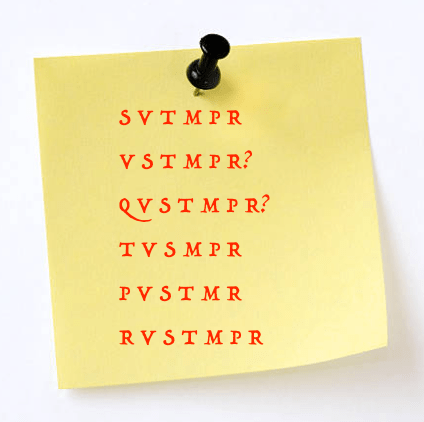
T V S M P R

In case you are wondering if I also want to go to Amsterdam with the train tomorrow, you could ask me this:
Wil je morgen met de trein naar Amsterdam gaan? -– Want you tomorrow with the train to Amsterdam to go?
This really sounds ridiculous, I know. De wereld op z’n kop!* But bear with me for a second because we are not done yet.
Now the word order has changed again:
V S T M P R?
If you would like to know why I want to go to Amsterdam, then ask me this:
Waarom wil je morgen met de trein naar Amsterdam gaan? – Why want you tomorrow with the train to Amsterdam to go?
You are using a Question Word to start the sentence with. We will refer to it as Q for the sake of simplicity. Write this down on your post-it:
Q V S T M P R?
What else are we missing here? We could start with Place, but our sentence will sound way too poetic and we are not writing poetry (yet). To Amsterdam want I go…, well you get the picture. At this point you will have become creative enough to make a sentence of your own, and I’m pretty sure that you can guess which word order is coming up next:
In Amsterdam kun je tot zes uur met je creditcard winkelen. – In Amsterdam can you until 6 o’clock with your credit card to shop.
P V S T M R
Finally, there is the Rest, and as I mentioned before, it’s a word that doesn’t fit in any of the other categories. I am not sure if I want to go to Amsterdam tomorrow, to be honest. I have been there many times before:
Misschien wil ik morgen met de trein naar Amsterdam gaan. – Maybe want I tomorrow with the train to Amsterdam to go.
R V S T M P R
When you are a beginner, simplicity is the key. It’s better to make short sentences that are correct than longer and more complicated ones with lots of mistakes. It will feel unnatural at first, but the earlier you accept the reality of this language the easier your life will be, trust me.
Write this down and keep it with you at all times. Success guaranteed!
Next time we will be talking about verbs, because I bet you would like to know about conjugated verbs, rest verbs, everything verbs.
Tot de volgende keer!!!
*De wereld op z’n kop = the world upside down. Don’t let this become your favourite phrase!
 Key to Dutch - Dutch language courses in Leiden