
There comes a moment in every students life when you discover that such thing as separable verbs exist. Until then, you were able to handle many things this language had thrown at you and just when you think that it can’t get worse, you are slapped in the face with scheidbare werkwoorden. Unless you speak German, of course, then all of this is a piece of cake and you can skip this post all together.
What are separable verbs? They are verbs that originally form one word and that get separated when you use them in a sentence. But don’t worry, the separate parts sometimes manage to find each other again!

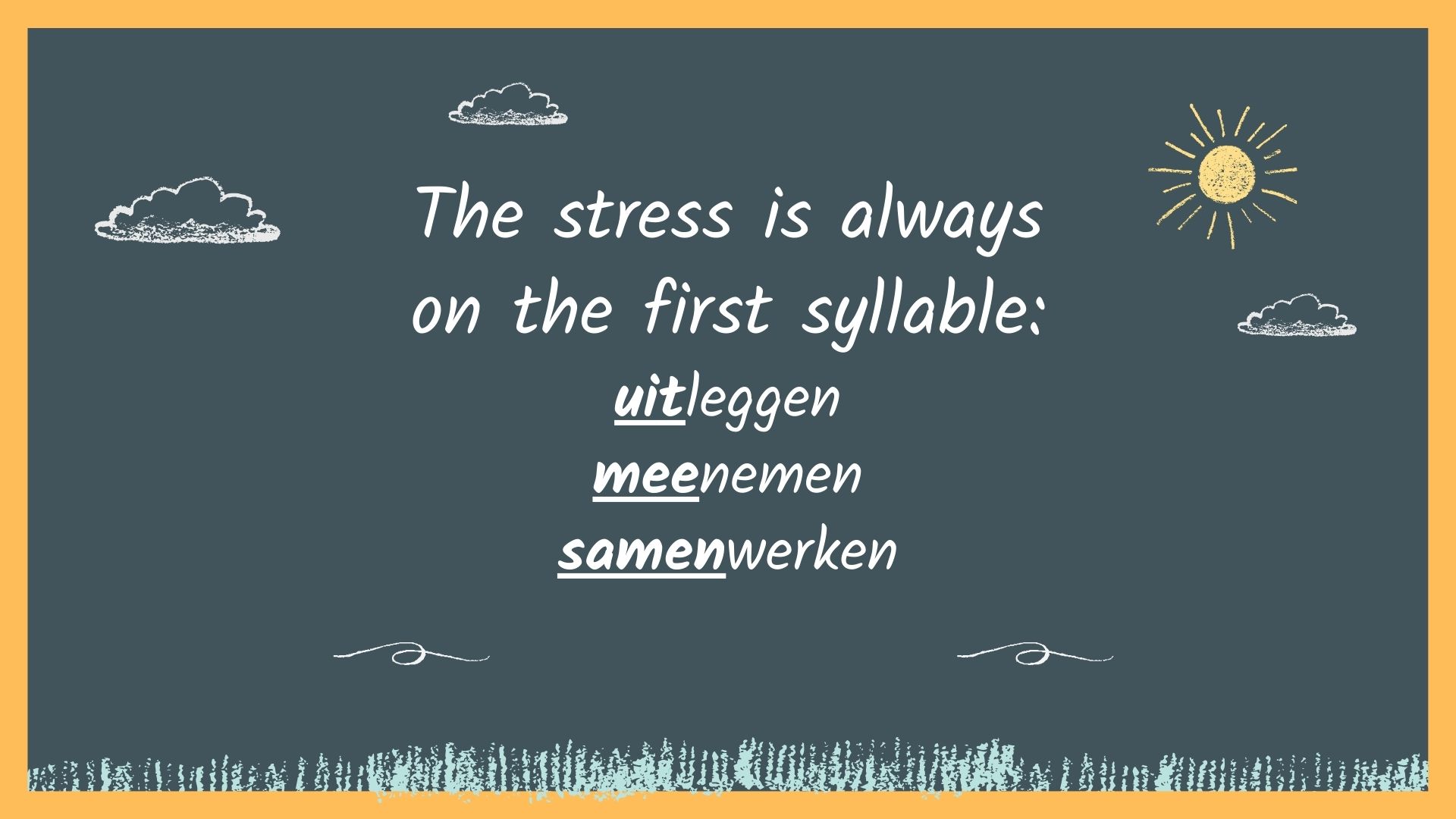
A few examples of separable verbs are: meenemen = to take with, samenwerken = to work together, uitleggen = to explain and many, many more.

What is very nice of course, is that you can form new verbs in this way. The verb nemen means to take. Add the preposition mee = with as a prefix and you get meenemen = to take with.
You know that a verb is separable, because the stress is always put on the first syllable, meaning the part that is not a verb. That first part doesn’t necessarily have to be a prepostion – mee, op, in, uit – but can also be an adverb like samen = together.
Now you know how to recognise separable verbs, but you still have to know how to use them in a sentence. Look at this overview of how to use them in simple sentences:
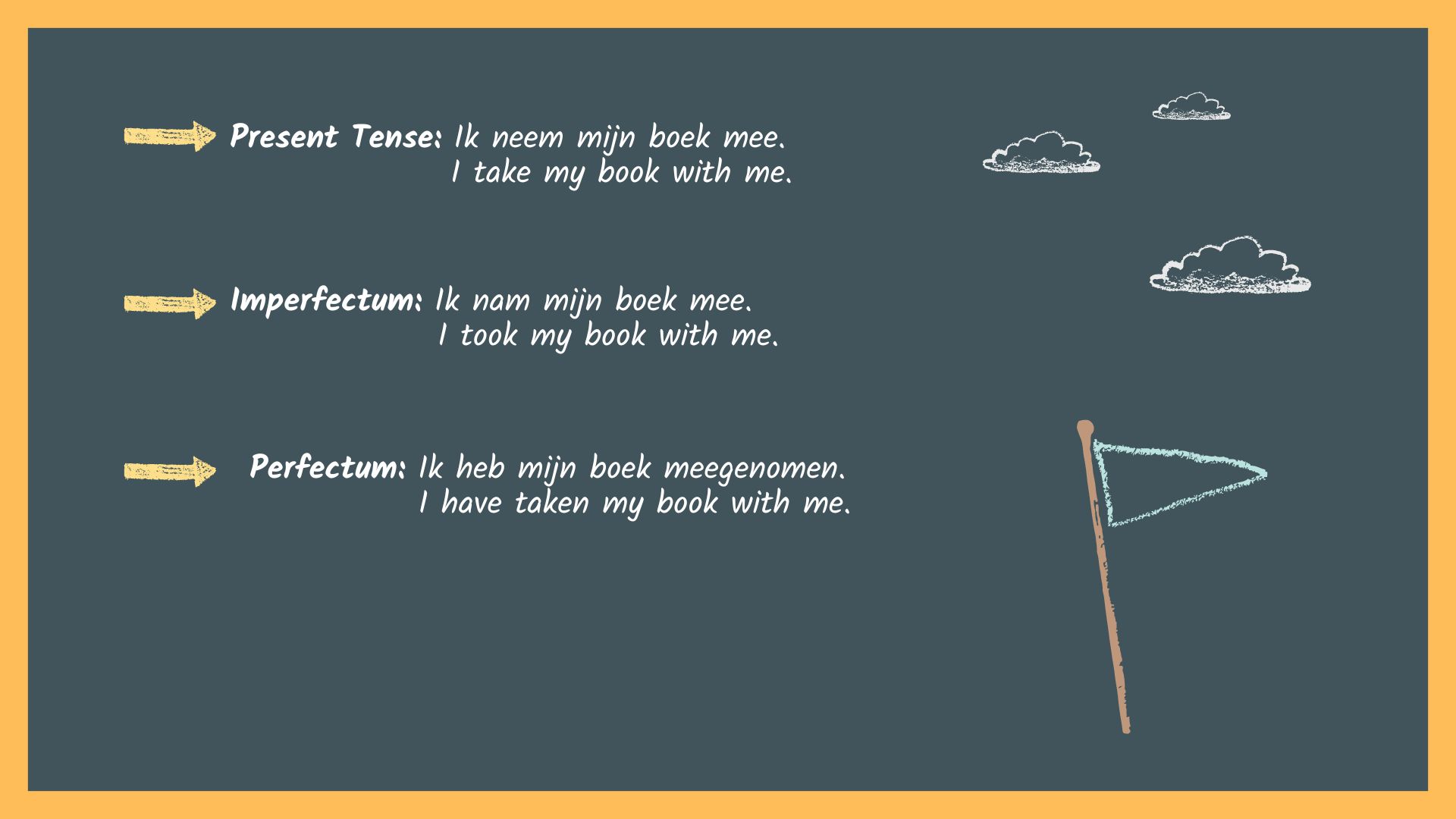
These are very simple phrases. But let’s take it one step further:

The rule is to separate the verbs in present and imperfectum. As you can see the verb gets conjugated normally, but the part that is not a verb is put at the end.
You can use it as one word in perfectum, but be careful to use the correct form of the verb in the perfectum. You can easily look it up online.
When you use the scheidbare werkwoorden with modal verbs, you use the whole verb, meaning the infinitive and you put it at the end of the sentence. If the verb you are using as your persons form is not a modal verb, you need to put it at the end of the sentence but separate the two parts with the word te. And that last option is probably one of the weirdest thing you have ever seen but you will need to get used to it!
Here are a few more examples of separable verbs to get you started:

Are all verbs with a prefix separable? No, of course not, what did you expect? It’s Dutch after all. But that’s for another post! Next time, we’ll be looking at how to use these verbs in more complicated sentences.
Don’t let it drive you crazy! Practice makes perfect, as they say. Tot de volgende keer!

 Key to Dutch - Dutch language courses in Leiden